Children’s National at the American Academy of Child & Adolescent Psychiatry Meeting
Several experts from Children’s National Hospital will be sharing their knowledge at the upcoming American Academy of Child & Adolescent Psychiatry Meeting in New York City, October 23-28. Here’s a sample of what you can expect.
- Mahdieh (Emmie) Bodaghi, M.D., a child and adolescent psychiatrist with expertise in telepsychiatry, will be on a clinical case conference panel about assessing and treating adolescents with comorbid catatonia. The presentation will feature a review of the current understanding of catatonia in the adolescent population and the assessment and management of catatonic features in bipolar disorder across inpatient and outpatient settings.
- Jennifer Dorr, D.O., M.P.H., will be chairing a workshop on advocating purposefully, in which participants learn about the new advocacy toolkit developed by the AACAP Advocacy Committee. Laura Willing, M.D., will also be presenting in the workshop. Additionally, Dr. Dorr and Meghan Schott, D.O., will be presenters in a member services forum on effectively engaging in public discourse and advocacy.
- Kriti Gandhi, M.D., Ayman Saleh, M.D., and Adelaide Robb, M.D., are presenting a poster on factors and implementations to decrease no-show rates for follow-up appointments at child psychiatry clinics.
- Dr. Robb, who is division chief of Psychiatry and Behavioral Services at Children’s National, is also co-presenting in a sold out workshop and a clinical case conference. The workshop will look at various psychopharmacological decision-making strategies and allow participants to identify their personal strengths and areas for improvement by completing a self-assessment. The clinical case conference will discuss deprescribing — the process of reducing or withdrawing medications that pose higher risks than benefits — and include real-life examples of deprescribing to support young patients from diverse cultural backgrounds.
- Priya Punnoose, M.D., and Dr. Schott will be presenting a clinical perspective on psychodynamic psychiatry in the inpatient setting.
- Dr. Schott, who is medical director of Psychiatric Emergency Services at Children’s National, will be chairing a forum, that includes Dr. Robb, and is geared towards early and mid-career child and adolescent psychiatrists in academia who want to learn more about academic promotion. Dr. Schott will also be participating in two other forums — on personal finance and public advocacy — as well as chairing a discussion on the coming-of-age animated movie Luca and having conversations about life transitions with patients and their families.
- Irene Chatoor, M.D., director of the Infant and Toddler Mental Health Program at Children’s National, will be chairing a clinical perspective on the diagnosis, treatment and follow-up of lack of interest in eating or food, as well as presenting her research during that time.




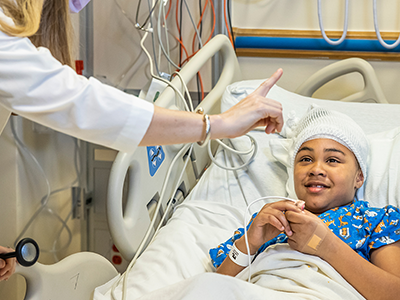 Children’s National Hospital announced a $96 million investment from an anonymous donor family to transform rare childhood brain tumor research and care. The donation, which strengthens our globally recognized leadership in the field, is one of the largest in the hospital’s history.
 Children’s National Hospital in Washington, D.C., was ranked #5 in the nation on the U.S. News & World Report 2023-24 Best Children’s Hospitals annual rankings. This marks the seventh straight year Children’s National has made the Honor Roll list. The Honor Roll is a distinction awarded to only 10 children’s hospitals nationwide.
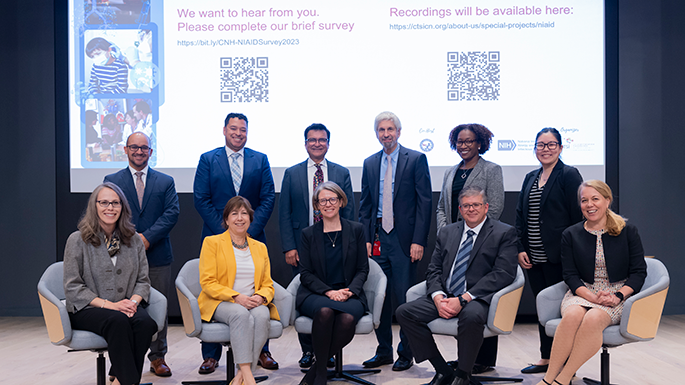



 A new validated self-report tool called the Gender Self-Report provides researchers a way to characterize the gender of research participants beyond their binary designated sex at birth.
 In December 2022, the Bear Institute, along with
 A clinical trial testing a new drug to increase growth in children with short stature. The first ever high-intensity focused ultrasound procedure on a pediatric patient with neurofibromatosis. A low dose gene therapy vector that restores the ability of injured muscle fibers to repair. These were among the most popular articles we published on Innovation District in 2022. Read on for our full top 10 list.









 A
A