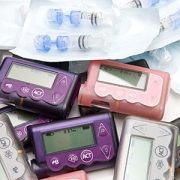
CME Webinar: Delaying Type 1 Diabetes: Early Antibody Screening and Use of Teplizumab in Children
In this webinar, Shideh Majidi, M.D., M.S.C.S., director of the Childhood and Adolescent Diabetes Program at Children’s National Hospital, discussed early antibody screening and use of teplizumab in children.
Key takeaways
- Current state of type 1 diabetes: Type 1 Diabetes (T1D) is characterized by absolute insulin deficiency due to pancreatic beta-cell destruction, often diagnosed in childhood but can occur in adults as well. It requires lifelong insulin management.
- Increased risk and screening: Individuals with family members who have T1D are at higher risk of developing T1D, but most newly diagnosed cases have no family history. Early screening can help reduce diabetic ketoacidosis (DKA) rates and improve management.
- Stages of type 1 diabetes: T1D is classified into three stages: Stage 1 (normal blood sugars with 2 or more autoantibodies), Stage 2 (dysglycemia with 2 or more autoantibodies), and Stage 3 (clinical T1D requiring insulin).
- Early screening and follow-up: Screening for diabetes autoantibodies can be done through various programs and labs. Follow-up involves regular monitoring based on the number of antibodies and blood sugar levels. If patients have antibodies or abnormal blood sugars, they can be referred to the T1Delay Program at Children’s National (through an endocrine/diabetes referral).
- Teplizumab (T-zield) treatment: T-zield is an FDA-approved treatment for delaying the onset of Stage 3 T1D in individuals aged 8 and older with Stage 2 T1D. It involves a 14-day infusion regimen and has been shown to delay insulin need by a median of 2 years.
- Clinical implementation and support: Children’s National offers T-zield treatment through a multi-departmental effort. The program aims to improve both quality of life and clinical outcomes for patients.
More information
- For more information on this webinar, as well as access to the presentation slide deck, visit our website.
- To register for future CME opportunities or view past presentations, visit childrensnational.org/Webinars.

 Children’s National Hospital in Washington, D.C., was ranked as a top hospital in the nation by the
 A team of experts at Children’s National Hospital, using the input of teens with Type 1 diabetes from our Children’s National clinics, adapted a six-week virtual group diabetes education program and mindfulness-based intervention. In their new
 The
The 







 Advanced MRI visualization techniques to follow blood flow in the hearts of cardiac patients. Gene therapy for pediatric patients with Duchenne muscular dystrophy. 3D-printed casts for treating clubfoot. These were among the most popular articles we published on Innovation District in 2023. Read on for our full list.
 The hospital will advocate for the unique needs of children as part of nationwide network working to accelerate transformative health solutions.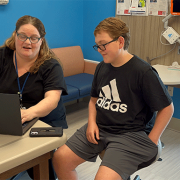





 Children’s National Hospital in Washington, D.C., was ranked #5 in the nation on the U.S. News & World Report 2023-24 Best Children’s Hospitals annual rankings. This marks the seventh straight year Children’s National has made the Honor Roll list. The Honor Roll is a distinction awarded to only 10 children’s hospitals nationwide.

 A clinical trial testing a new drug to increase growth in children with short stature. The first ever high-intensity focused ultrasound procedure on a pediatric patient with neurofibromatosis. A low dose gene therapy vector that restores the ability of injured muscle fibers to repair. These were among the most popular articles we published on Innovation District in 2022. Read on for our full top 10 list.