Executive function interventions may be critical to long-term mental health in autism
People with autism who struggle with challenges related to executive function are more likely to suffer poor mental health outcomes, according to findings from a large-scale longitudinal study published in The Journal of Child and Adolescent Psychiatry.
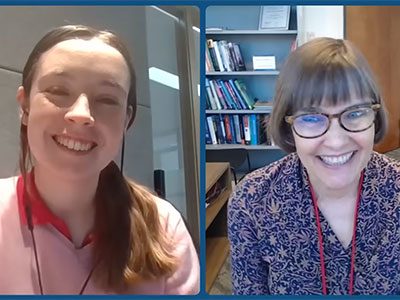
Lead author of the study, Lauren Kenworthy, PhD, division chief of Neuropsychology at Children’s National, recently appeared on Mind the Kids, a podcast hosted by the Association for Child and Adolescent Mental Health (ACAMH), to discuss the findings. Dr. Kenworthy touched on why interventions targeted to address executive function challenges, like Unstuck and On Target, may be critical tools to ensure better mental health outcomes for autistic youth and young adults.
What it means
Executive functions are higher order cognitive abilities that allow people to regulate their thoughts, feelings and behaviors to meet the demands of their environment. People with executive function challenges often struggle with several areas of self-regulation that can truly impact daily life, such as inhibition, flexibility and working memory.
“We’ve known for a long time now that executive functions are strongly linked to mental health, including depression, anxiety and aggression, for all of us,” Dr. Kenworthy told podcast host Clara Faria, PhD. “We’ve also known for a long time that executive functions and mental health are really challenging areas for a lot of people with autism.”
Despite the significance of executive function in autism, studies examining the trajectory and impact of these challenges long term have been difficult to complete in a comprehensive way. Small sample sizes and/or limited age ranges have prevented researchers from capturing a true notion of how executive function and mental health outcomes develop over time.
Why it matters
This study is the first large-scale longitudinal study of executive function and mental health in autism. It shows the lasting effect of executive function challenges on autistic people, especially drilling into specific subcategories of symptoms such as aggression, anxiety and depressive mood and finding that many of these symptoms only worsen over time.
Children’s National leads the way
Dr. Kenworthy and her study co-authors concluded from the findings that interventions targeting executive function skills, especially flexibility, in autistic children are critical to a child’s well-being throughout their lives. The right interventions may reduce the burden of both the executive function challenges themselves and their impact on a child’s mental health over time.
Unstuck and On Target, a set of tools created by Dr. Kenworthy and a team of researchers from Children’s National and Children’s Hospital Colorado, is one example of an evidence-based intervention that is ready to be deployed in schools and clinics.
“We developed executive function interventions designed to improve kids’ ability to be flexible, make plans and set goals,” Dr. Kenworthy notes in the podcast. “And we’ve designed them to be delivered in the public school system with fidelity by classroom teachers and special educators because every kid gets to go school. Some of their most important work occurs in school so it’s also the real-world setting where they need the help.”
Listen to the ACAMH podcast, Beyond the Diagnosis: Supporting Executive Function to Improve Autism Mental Health, and read the full study, Executive function challenges persist into young adulthood and predict mental health outcomes in autism.