Two ultrasound measurements improve pediatric kidney function assessment
Two simple ultrasound measurements can help doctors better spot kidney blockages in children and reduce the need for radiation tests.
Kidney blockages in children, often caused by ureteropelvic junction obstruction (UPJO), can be hard to diagnose. These blockages can lead to hydronephrosis, or swelling of the kidney, which can damage kidney function if not found early.
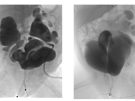
The most accurate test, called a MAG3 scan, shows how well the kidney works and drains urine. However, this test uses radiation and requires an IV. For that reason, doctors often use ultrasound first since it is safe and does not use radiation. The challenge is that reading ultrasounds to judge how serious the swelling is can be unclear and based on opinion.
A study led by Aaron Krill, MD, urologist at Children’s National Hospital, looked at whether simple ultrasound measurements could help doctors make more consistent and confident decisions.
What’s been the hold-up in the field?
Doctors use grading systems to describe the severity of hydronephrosis, or kidney swelling. These systems often depend on whether the kidney tissue appears “thin.” The problem is that there is no clear rule for what “thin” actually means. As a result, different doctors may describe the same ultrasound differently, which can make it harder to decide which children need more testing.
How does this work move the field forward?
In this study, Dr. Krill and his team found that two ultrasound measurements —the width of the kidney’s central area (renal pelvic diameter) and the thickness of the kidney tissue (renal parenchymal thickness) — were linked to signs of blockage seen on a MAG3 scan.
Researchers looked at whether different radiologists would get the same results when making these measurements. They found very strong agreement between doctors, even when they used slightly different ways to find the thinnest part of the kidney tissue.
“We’ve relied on visual grading for years,” Dr. Krill said. “We wanted to see if we could use clear measurements that are repeatable and directly connected to how the kidney is functioning.”
The results showed that these measurements are reliable and can be standardized.
How will this work benefit patients?
Using these clear measurements can help doctors better identify which children with hydronephrosis are truly at risk for blockage. This means fewer children may need a MAG3 scan if their ultrasound measurements show they are low risk. At the same time, children who are at higher risk for blockage can be identified sooner. This approach supports safer, more personalized care.
How is Children’s National leading in this space?
Children’s National is one of the first groups to connect clear ultrasound measurements with objective results from MAG3 scans. By combining these pieces, the team is helping move care away from opinion-based grading and toward more consistent, measurement-based decision-making. This work supports smarter testing and more tailored follow-up for each child.
Read the full study, Assessing inter-rater reliability of objective renal sonographic measurements for identification of clinically significant ureteropelvic junction obstruction, in the Journal of Pediatric Urology.
Additional authors from Children’s National: Chris Corbett, MD, Jane S Kim, MD, Hassan Aboughalia, MD, Butool Hisam, MD.