
Tag Archive for: genetic sequencing

Children’s National Research & Innovation Campus welcomes Rare Disease Institute as first occupant

The Children's National Research & Innovation Campus

The Rare Disease Institute, which includes the largest clinical group of pediatric geneticists in the nation, focuses on developing the clinical care field of the more than 8,000 rare diseases currently recognized and advancing the best possible treatments for children with these diseases.

The Children’s National Research & Innovation Campus (RIC), the first-of-its-kind pediatric research and innovation hub located in Washington, D.C., now has its first occupant – the Rare Disease Institute (RDI).

The institute, which includes the largest clinical group of pediatric geneticists in the nation, focuses on developing the clinical care field of the more than 8,000 rare diseases currently recognized and advancing the best possible treatments for children with these diseases.

With the advent of advanced DNA sequencing, databanks, informatics, new technology, pediatric consortiums and global partnerships, clinical researchers have never been in a better position to diagnose and treat rare diseases. As this field of medicine continues to rapidly evolve, the benefits provided to patients, families, clinicians and researchers through its new home at the RIC will further accelerate the trajectory of rare disease from an academic specialty into a mainstream medical field.

Marshall Summar, M.D., director of the RDI and chief of the Division of Genetics and Metabolism at Children’s National, is well-known for pioneering work in caring for children diagnosed with rare diseases. He developed and launched the world’s first RDI at Children’s National in 2017, and it became the first Clinical Center of Excellence designated by the National Organization for Rare Diseases (NORD). Dr. Summar discusses how this move will positively impact treatment, services and discovery on a national level.

Q: What are the patient benefits of the move to the RIC?

A: Patients with genetic conditions spend a lot of time visiting the hospital. By creating an easy access environment that is designed around their needs, we can provide world-class care to the families we work with. We designed extensive telemedicine capacity into the clinic so we can continue to expand our digital reach to wider areas. The parking facility is also a huge plus for our families with mobility impairments. The garage is only steps away from the clinic entrance. The architectural team worked closely with the clinical team to create a patient-centric facility for a safe and positive experience.

Q: What are the research benefits of being on the RIC?

A: One of our core goals at the RIC was to create research “neighborhoods.” A focus of the first phase of the RIC occupancy is genetics and the RDI is the clinical manifestation of that focus. Having the clinical service that sees patients with genetic disease, sharing space and campus with the Center for Genetic Medicine Research team and the molecular genetics laboratory creates that thematic neighborhood. Some of the best basic science ideas and projects come from the clinical world. Close interaction between the clinicians and the scientists will enhance those “spark” encounters. In addition, the physicians in the RDI who do bench research are also part of the genetic medicine program which furthers these interactions.
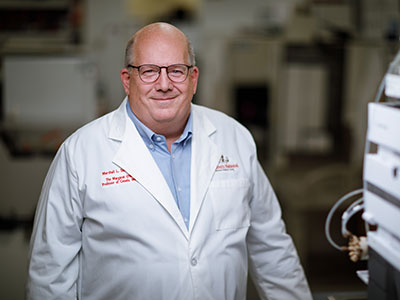
Marshall Summar

Marshall Summar, M.D., director of the RDI and chief of the Division of Genetics and Metabolism at Children’s National.

Q: What would you say has been the most significant change to your field in the past decade?

A: The ability to access next-generation genetic sequencing for more and more of our patients. The percentage of patients who can get a meaningful diagnosis with these technologies increases every year. With these techniques, we are finding new links between genes and disease at the rate of 5-10 per week.

Q: What excites you most about the future of medical genetics and rare diseases?

A: Two things are really exciting to me. The first is the ability to diagnose more patients than at any time in history. The second is the rate at which new genetic/rare disease therapies are being developed (around 50% of the FDA new drug approvals per year).

As the largest clinical program in North America and with our new location on this dedicated research and innovation campus in Washington, D.C., Children’s National and the RDI are uniquely poised to dramatically change the field of rare disease medicine. Our clinical models have started spreading to other centers across the country and will help shape the field for years to come. We are evolving rare disease into a true mainstream medical field, and the ability to make this type of change to a field is very unique to Children’s National.

Learn more about the Children’s National Research & Innovation Campus.

Urinary bacteria in spinal cord injury cases may tip balance toward UTIs

E coli bacteria

Patients with spinal cord injuries nearly universally have bacteria present in their urine regardless of whether they have a urinary tract infection.

The fallout from spinal cord injury doesn’t end with loss of mobility: Patients can have a range of other issues resulting from this complex problem, including loss of bladder control that can lead to urine retention. One of the most serious implications is urinary tract infections (UTIs), the most common cause of repeat hospitalization in people with spinal cord injuries, explains Hans G. Pohl, M.D., associate chief in the division of Urology at Children’s National Health System.

Diagnosing UTIs in people with spinal cord injuries is trickier than in people who are otherwise healthy, Dr. Pohl explains. Patients with spinal cord injuries nearly universally have bacteria present in their urine regardless of whether they have a UTI. It’s unclear whether these bacteria are innocent bystanders or precursors to UTIs in patients who don’t yet show symptoms. And although antibiotics can wipe out this bacterial population, these drugs can have undesirable side effects and frequent use can promote development of antibiotic-resistant bacteria.

Although clinical dogma has long promoted the idea that “healthy” urine is sterile, Dr. Pohl and colleagues have shown that a variety of bacteria live in urine, even in people without symptoms. These microorganisms, like the intestinal microbiome, live in harmony with their hosts and may even help promote health. However, it’s unclear what this urinary microbiome might look like for patients with spinal cord injury before, during and after UTIs.

To start investigating this question, Dr. Pohl and co-authors recently reported a case study they published online Sept. 21, 2018, in Spinal Cord Series and Cases. The case report about a 55-year-old man who had injured the thoracic segment of his spinal cord—about the level of the bottom of his shoulder blades—in a skiing accident when he was 19 was selected as “Editor’s Choice” for the journal’s October 2018 issue.  The patient had a neurogenic bladder, which doesn’t function normally due to impaired communication with the spinal cord. To compensate for this loss of function, this patient needed to have urine removed every four to six hours by catheterization.

Over eight months Dr. Pohl, the study’s senior author, and colleagues collected 12 urine samples from this patient:

  • One was collected at a time the patient didn’t show any symptoms of a UTI
  • Nine were collected when the patient had UTI symptoms, such as bladder spasticity
  • Two samples were collected when the patient had finished antibiotic treatment for the UTI.

The researchers split each sample in half. One part was put through a standard urinalysis and culture, much like what patients with a suspected UTI would receive at the doctor’s office. The other part was analyzed using a technique that searched for genetic material to identify bacteria that might be present and to estimate their abundance.

The researchers found a variety of different bacteria present in these urine samples. Regardless of the patient’s health status and symptoms, the majority of these bacterial species are known to be pathogenic or potentially pathogenic. By contrast, this patient’s urine microbiome appeared to largely lack bacterial species known to be either neutral or with potentially probiotic properties, such as Lactobacillus.

All of the bacteria that grew in culture also were identified by their genetic material in the samples. However, genetic sequencing also identified a possible novel uropathogenic species called Burkholderia fungorum that didn’t grow in the lab in five of the samples. This bacterium is ubiquitous in the environment and has been identified in soil- and plant-based samples. It also has been discovered in the respiratory secretions of patients with cystic fibrosis, in patients with a heart condition called infectious endocarditis, in the vaginal microbiota of patients with bacterial vaginosis, and in the gut of patients with HIV who have low T-cell counts. Dr. Pohl says it’s unclear whether this species played an infectious role in this patient’s UTI or whether it’s just part of his normal urine flora.

“Consistent with our previous work, this case report demonstrates that rather than healthy urine being sterile, there is a diverse urine bacterial ecosystem during various states of health and disease,” Dr. Pohl says. “Rather than UTIs resulting from the growth or overgrowth of a single organism, it’s more likely that a change in the healthy balance of the urine ecosystem might cause these infections.”

By monitoring the relative abundance of different bacteria types present in the urine of patients with spinal cord injury and combining this information with a patient’s symptoms, Dr. Pohl says doctors may be able to make more accurate UTI diagnoses in this unique population.

In addition to Dr. Pohl, study co-authors include Marcos Pérez-Losada, Ljubica Caldovic, Ph.D., Bruce Sprague and Michael H. Hsieh, M.D., Children’s National; Emma Nally, Suzanne L. Groah and Inger Ljungberg, MedStar National Rehabilitation Hospital; and Neel J. Chandel, Montefiore Medical Center.