Tag Archive for: cognitive training

Treating neurocognitive difficulties in children with sickle cell disease
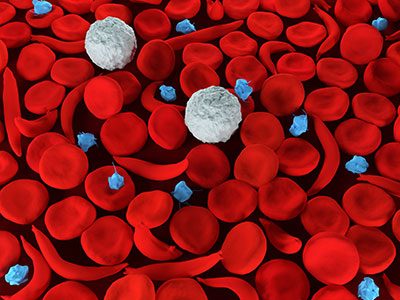
Sickle-Cell-Blood-Cells

An adaptive cognitive training program could help treat attention and working memory difficulties in children with sickle cell disease (SCD), a new study published in the of Journal of Pediatric Psychology shows.

An adaptive cognitive training program could help treat attention and working memory difficulties in children with sickle cell disease (SCD), a new study published in the of Journal of Pediatric Psychology shows.

These neurocognitive difficulties have practical implications for the 100,000 individuals in the U.S. with SCD, as 20-40% of youth with SCD repeat a grade in school and fewer than half of adults with SCD are employed. Interventions to prevent and treat neurocognitive difficulties caused by SCD have the potential to significantly improve academic outcomes, vocational attainment and quality of life.

The study, led by Steven Hardy, Ph.D., director of Psychology and Patient Care Services at the Center for Cancer and Blood Disorders at Children’s National Hospital, examined a promising approach using an adaptive cognitive training program (known as Cogmed Working Memory Training) that patients complete at home on an iPad.

Using a randomized controlled trial design, children were asked to complete Cogmed training sessions 3 to 5 times per week for about 30 minutes at a time until they completed 25 sessions. The Cogmed program involves game-like working memory exercises that adapt to the user’s performance, gradually becoming more challenging over time as performance improves. The team found that patients with sickle cell disease (SCD) who completed the cognitive training intervention showed significant improvement in visual working memory compared to a waitlist group that used Cogmed after the waiting period. Treatment effects were especially notable for patients who completed a training “dose” of 10 sessions.

“Patients who completed at least 10 cognitive training sessions showed improved visual working memory, verbal short-term memory and math fluency,” Dr. Hardy said.

SCD increases risk for neurocognitive difficulties because of cerebrovascular complications (such as overt strokes and silent cerebral infarcts) and underlying disease characteristics (such as chronic anemia). Neurocognitive effects of SCD most commonly involve problems with attention, working memory and other executive functions.

“This study demonstrates that digital working memory training is an effective approach to treating neurocognitive deficits in youth with sickle cell disease,” Dr. Hardy added. “We also found that benefits of the training extend to tasks that involve short-term verbal memory and math performance when patients are able to stick with the program and complete at least 10 training sessions. These benefits could have a real impact on daily living, making it easier to remember and follow directions in school and at home, organize tasks or solve math problems that require remembering information for short periods of time.”

To date, there have been few efforts to test interventions that address the neurocognitive issues experienced by many individuals with SCD. These findings show that abilities are modifiable and that a non-pharmacological treatment exists.

The Comprehensive Sickle Cell Disease Program at Children’s National is a leader in pediatric SCD research and clinical innovation. This study was funded by a grant from the Doris Duke Charitable Foundation, which was the only Innovations in Clinical Research Award ever awarded to a psychologist (out of 31 grants totaling over $15 million), since the award established a focus on sickle cell disease in 2009.
Cognitive training exercises at home help kids with sickle cell boost visuospatial working memory

A team led by Children’s National Health System clinicians and research scientists attempted to identify novel approaches to boost working memory in children who suffer from sickle cell disease.

A team led by Children’s National Health System clinicians and research scientists attempted to identify novel approaches to boost working memory in children who suffer from sickle cell disease.

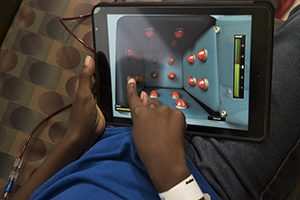
Youths with sickle cell disease who used hand-held computers to play game-like exercises that get harder as a user’s skill level rises improved their visuospatial working memory (WM). Children with sickle cell disease, however, completed fewer training sessions during an initial study compared with children with other disease-related WM deficits.

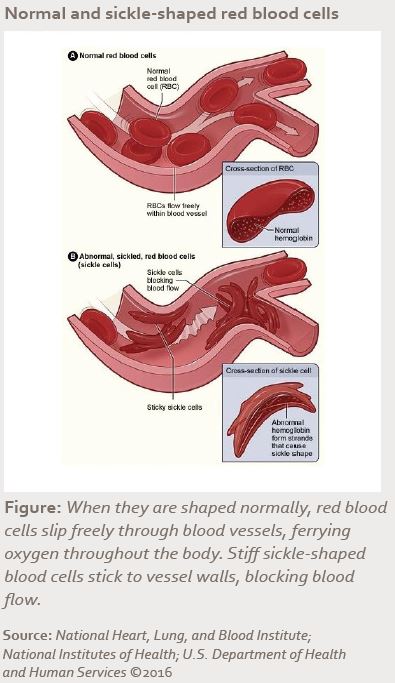
A team led by Children’s National Health System clinicians and research scientists attempted to identify novel approaches to boost WM in children who suffer from sickle cell disease. Kids who have this red blood cell disorder inherit abnormal hemoglobin genes from each parent. Rather than slipping through large and small vessels to ferry oxygen throughout the body, their stiff, sickle-shaped red blood cells stick to vessel walls, impeding blood supply and triggering sudden pain. Children with sickle cell disease have more difficulty completing tasks that place demands on one’s WM, the brain function responsible for temporarily remembering information and manipulating that information to facilitate learning and reasoning. As a result, they’re more likely to repeat a grade, require special academic services, and to have difficulty maintaining employment as adults.

Because computerized cognitive training programs have been used with success to boost WM for children with other health conditions, such as childhood cancer, the research team sought to examine the feasibility of using the technique for kids with sickle cell disease. “This small study highlights the challenges and opportunities of implementing a home-based cognitive training intervention with youths who have sickle cell disease,” says Steven J. Hardy, PhD, a pediatric psychologist in the Divisions of Hematology, Oncology, and Blood and Marrow Transplantation at Children’s National. “While a larger, randomized controlled clinical trial is needed to better characterize efficacy, our initial work indicates that Cogmed is acceptable and moderately feasible in this population.”

Children’s National is home to the Sickle Cell Disease (SCD) Program, one of the nation’s largest, most comprehensive pediatric programs that cares for 1,350 patients younger than 21 annually. Over 15 months, the team recruited youths aged 7 to 16 participating in the program who had an intelligence quotient of at least 70 and an absolute or relative memory deficit. Those who lacked access to a tablet computer were loaned an iPad Mini 2 loaded with Cogmed RM, an interactive audiovisual cognitive training program that consists of exercises that get progressively more challenging. A clinical psychologist provided coaching and moral support through weekly telephone calls to review progress and challenges, and to offer tips on how to optimize the youths’ progress.

Six of 12 eligible participants – all girls – completed by finishing at least 20 sessions of the program. The mean number of sessions completed was 15.83, and the kids spent a median of 725 minutes working actively on Cogmed exercises. “Participants who completed Cogmed indicated that they perceived greater levels of social support from teachers,” Hardy and colleagues write in the study, published by Pediatric Blood & Cancer. “[T]here was not a statistical difference in perceived parent support.”

Among those children who completed Cogmed, standard scores increased an average of 5.05 on a measure of visuospatial short-term memory, 19.72 on a measure of verbal WM, 27.53 on a measure of visuospatial short-term memory, and 23.82 on a measure of visuospatial WM. The researchers also observed a normalizing of memory functioning for those who finished Cogmed, as a significant portion of participants scored below the average range before using Cogmed and most scored in the average range or higher on memory tests after finishing the program.

“In this initial feasibility trial, adherence to Cogmed was lower than expected (50 percent completion) compared to adherence rates of other samples of children with medical histories, including patients with symptomatic epilepsy and youth treated for cancer,” Hardy and co-authors write. “Thus, additional modifications may be needed to achieve consistent delivery of the intervention to youth with SCD.”

Related Resources: Research at a Glance

Feasibility of home-based computerized WM training for sickle cell disease

What’s Known
Cognitive deficits are a common complication affecting about one-third of kids who have the higher risk sickle cell disease genotypes, HbSS and HbSβ0 thalassemia. While such deficits have been well-documented, no treatment has been proven to recover cognitive function for kids with sickle cell disease. Sickle cell disease is a group of red blood cell disorders in which abnormal genes that children inherit from parents cause their bodies to make sickle-shaped hemoglobin S. Kids with sickle cell disease are at heightened risk for neurocognitive deficits, which can have practical implications for their ability to learn and to succeed academically.

What’s New
Because home-based computerized cognitive training programs have helped to improve working memory (WM) for children with epilepsy and for childhood cancer survivors, a team led by Children’s National Health System researchers and clinicians sought to gauge the feasibility of using such an approach for a small number of children with sickle cell disease. The pilot study found that girls were more likely to complete the cognitive training exercises than boys. Additionally, children whose teachers showed a high level of support spent more time working on the exercises, completed more sessions, and were more likely to finish the program. The mean number of completed sessions was 15.83. Participants who reported experiencing fewer functional limitations as a result of sickle cell disease-related pain completed more sessions. Overall, children who completed Cogmed exercises showed improvements in verbal WM, and visuospatial short-term memory and WM.

Questions for Future Research
Q: Because sickle cell disease is often accompanied by sudden attacks of severe pain, would concurrent delivery of pain-management interventions impact children’s ability to complete cognitive training exercises?
Q: Would adding functional magnetic resonance imaging help to clarify the association between adaptive cognitive skills training and changes to physiological processes, such as alterations in prefrontal and parietal cortical activity, and functional connectivity?

Source: S.J. Hardy, K.K. Hardy, J.C. Schatz, A.L. Thompson, and E.R. Meier. Feasibility of Home-Based Computerized Working Memory Training With Children and Adolescents With Sickle Cell Disease.” Published online by Pediatric Blood & Cancer May 26, 2016.