
 https://innovationdistrict.childrensnational.org/wp-content/uploads/2024/10/Brain-MRI-feature.jpg
300
400
Innovation District
https://innovationdistrict.childrensnational.org/wp-content/uploads/2025/09/InnovationDistrict_CN_WebHeader-1396px-1030x151.png
Innovation District2024-10-04 13:46:442026-02-06 15:10:45Making pediatric epilepsy surgery more accessible
https://innovationdistrict.childrensnational.org/wp-content/uploads/2024/10/Brain-MRI-feature.jpg
300
400
Innovation District
https://innovationdistrict.childrensnational.org/wp-content/uploads/2025/09/InnovationDistrict_CN_WebHeader-1396px-1030x151.png
Innovation District2024-10-04 13:46:442026-02-06 15:10:45Making pediatric epilepsy surgery more accessibleTranslating discovery into treatment
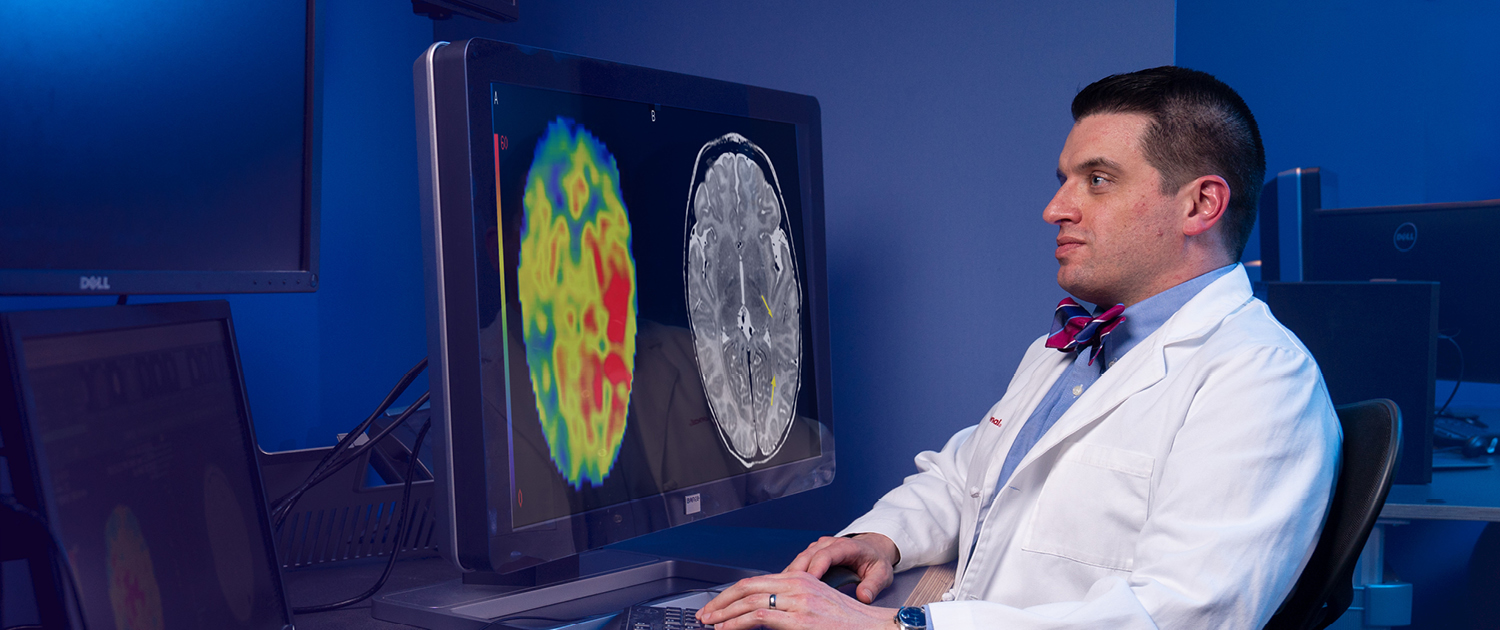
These discoveries directly inform and transform patient care. By characterizing how focal dysplastic lesions exert widespread network effects, clinicians at Children’s National are refining surgical planning, improving patient selection and advancing more personalized treatment strategies for children with FCD-related epilepsy.
In an earlier landmark study, Dr. Cohen and colleagues evaluated 143 children with confirmed FCD risk factors to better understand the development of pharmacoresistant epilepsy. The findings were striking: failure of just one appropriately selected antiseizure medication was associated with a markedly increased risk and earlier onset of pharmacoresistance. Traditional predictors including lobar location, pathologic subtype and age of seizure onset were not significant factors.
This work challenges long-standing definitions that require failure of two or more medications and provides a data-driven framework for earlier surgical referrals. This approach has the potential to reduce years of uncontrolled seizures and improve neurodevelopmental outcomes.
“Dr. Cohen’s research has redefined pharmacoresistance in children with focal cortical dysplasia, showing that failure of a single antiseizure medication should prompt early consideration of surgery,” said William D. Gaillard, chief of neurology at Children’s National. “His state-of-the-art imaging has also revealed how focal lesions affect distributed brain networks, helping explain clinical features, comorbidities and surgical outcomes.”

What’s next for patients with FCD
Building on these advances, Dr. Cohen and other researchers at Children’s National continue to push toward earlier diagnosis, more precise intervention and better long-term quality-of-life outcomes for children with FCD. Ongoing efforts are focused on developing network-informed, individually predictive models of epilepsy diagnosis and treatment, as well as studying how early, targeted interventions can alter developmental trajectories.
By integrating cutting-edge imaging, rigorous clinical research and multidisciplinary expertise, Children’s National Hospital is leading a paradigm shift in how focal cortical dysplasia is understood and treated. This commitment to translating discovery into practice is improving outcomes today while shaping the future of care for children with FCD.
https://innovationdistrict.childrensnational.org/wp-content/uploads/2024/10/Brain-MRI-feature.jpg
300
400
Innovation District
https://innovationdistrict.childrensnational.org/wp-content/uploads/2025/09/InnovationDistrict_CN_WebHeader-1396px-1030x151.png
Innovation District2024-10-04 13:46:442026-02-06 15:10:45Making pediatric epilepsy surgery more accessible https://innovationdistrict.childrensnational.org/wp-content/uploads/2022/08/illustration-of-brain-and-brainwaves-featured.png
300
400
Innovation District
https://innovationdistrict.childrensnational.org/wp-content/uploads/2025/09/InnovationDistrict_CN_WebHeader-1396px-1030x151.png
Innovation District2022-08-26 09:36:472026-02-06 15:10:50Risk factors for pharmacoresistant pediatric epilepsy
https://innovationdistrict.childrensnational.org/wp-content/uploads/2022/08/illustration-of-brain-and-brainwaves-featured.png
300
400
Innovation District
https://innovationdistrict.childrensnational.org/wp-content/uploads/2025/09/InnovationDistrict_CN_WebHeader-1396px-1030x151.png
Innovation District2022-08-26 09:36:472026-02-06 15:10:50Risk factors for pharmacoresistant pediatric epilepsy https://innovationdistrict.childrensnational.org/wp-content/uploads/2022/08/brain-abnormalities-Featured.jpg
300
400
Innovation District
https://innovationdistrict.childrensnational.org/wp-content/uploads/2025/09/InnovationDistrict_CN_WebHeader-1396px-1030x151.png
Innovation District2022-08-17 15:13:372026-02-06 15:10:47AI algorithm that detects brain abnormalities could help cure epilepsy
https://innovationdistrict.childrensnational.org/wp-content/uploads/2022/08/brain-abnormalities-Featured.jpg
300
400
Innovation District
https://innovationdistrict.childrensnational.org/wp-content/uploads/2025/09/InnovationDistrict_CN_WebHeader-1396px-1030x151.png
Innovation District2022-08-17 15:13:372026-02-06 15:10:47AI algorithm that detects brain abnormalities could help cure epilepsy