

 https://innovationdistrict.childrensnational.org/wp-content/uploads/2024/01/pediatric-clinic-logo-400x300-1.png
300
400
Innovation District
https://innovationdistrict.childrensnational.org/wp-content/uploads/2025/09/InnovationDistrict_CN_WebHeader-1396px-1030x151.png
Innovation District2024-01-05 09:39:432026-01-09 15:55:44Children’s National designated as Polycystic Kidney Disease (PKD) Foundation Pediatric Clinic
https://innovationdistrict.childrensnational.org/wp-content/uploads/2024/01/pediatric-clinic-logo-400x300-1.png
300
400
Innovation District
https://innovationdistrict.childrensnational.org/wp-content/uploads/2025/09/InnovationDistrict_CN_WebHeader-1396px-1030x151.png
Innovation District2024-01-05 09:39:432026-01-09 15:55:44Children’s National designated as Polycystic Kidney Disease (PKD) Foundation Pediatric ClinicPicture this: A 15-year-old boy presents with protein and blood in his urine and gradual hearing loss. After a few years of monitoring, he’s referred for a full evaluation, including genetic testing.
What could more genetic testing reveal? A targeted gene panel confirms X-linked Alport syndrome, a genetic kidney disorder caused by a mutation on the X chromosome inherited from his mother’s side of the family.
With this precise diagnosis, the care team can skip a kidney biopsy and start treatment with an ACE inhibitor to reduce protein in the urine, protect kidney function and manage blood pressure. They also recommend supportive lifestyle measures, including a low-salt, kidney-friendly diet and staying well-hydrated. The patient’s younger brother is advised to undergo urine screening and consider genetic testing as early identification can make the condition much easier to manage.
This is the level of comprehensive care delivered by the Inherited and Polycystic Kidney Disease (IPKD) Program at Children’s National Hospital: critical treatment and deep clinical insight that transforms disease trajectories, supports the whole patient and proactively protects future generations.
10 years in the making
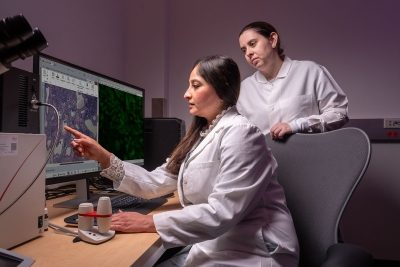 The IPKD Program at Children’s National stands out as a leader in pediatric kidney genetics with specialized expertise in polycystic kidney disease (PKD). Families receive coordinated, start-to-finish care in a single, unified program.
“When children receive kidney and genetics care in separate settings, the absence of coordinated communication between teams can result in fragmented and inconsistent evaluations,” said Ashima Gulati, MD, PhD, pediatric nephrologist and director of the IPKD Program.
In a 10-year study published in the Journal of the American Society of Nephrology, 356 patients were evaluated; 188 underwent genetic testing, and 147 received an informative result. Every patient with an informative result experienced at least one positive clinical impact from their genetic diagnosis.
To streamline diagnosis, the IPKD Program provides integrated genetic counseling. Families first meet with a nephrologist to review imaging, prior evaluations and family history, followed by genetic testing and a joint review of results with both the nephrologist and genetic counselor.
The program also works closely with psychology, urology, endocrinology, nutrition and especially hepatology since many cystic and inherited kidney conditions involve the liver. This integrated model ensures timely, tailored referrals.
As patients reach adolescence, transition planning begins around age 18 to prepare families for adult services. By age 21, the team helps facilitate a smooth handoff to trusted adult nephrologists and community resources.
Setting the standard for excellence
With its integrated genetics-nephrology model, the IPKD Program at Children’s National has been designated a Pediatric Center of Excellence by the PKD Foundation. The Foundation aims to elevate disease-specific expertise, share best practices and connect patients and clinicians with trusted resources.
The IPKD Program team encourages families to engage with the PKD community through advocacy and research, including the annual Walk for PKD and the Foundation’s patient registry. Children’s National is also one of the few sites participating in a national autosomal recessive PKD (ARPKD) trial of Tolvaptan, offering eligible families the option to enroll.
For Dr. Gulati, the intersection of care, research and advocacy is where the work is most meaningful. “There’s something remarkable about caring for a patient in clinic one day, reviewing their results the next and then walking alongside their family at an advocacy event,” she said. “Moments like that remind me why this work matters.”

Looking ahead
This multidisciplinary model, from genetic counseling to coordinated referrals, offers a strong blueprint for future PKD and genetic kidney programs to follow. The team aims to keep strengthening the IPKD Program, particularly by improving support for children whose genetic tests reveal variants of uncertain significance, which can leave families without clear answers.
By combining in-house genetics expertise, collaboration with disease-specific specialists and ongoing research advances, the team expects fewer inconclusive results over time. Even when diagnoses are complex, the program’s comprehensive approach supports patients well beyond their clinic visits, shaping their long-term care journey.
“What motivates me most is the opportunity to bring together clinical care, research and advocacy within a unified, disease-focused framework,” said Dr. Gulati. “As physician-scientists, our goal is to translate laboratory discoveries into a deeper understanding of disease, ensuring that scientific insight directly strengthens and elevates the care we provide to our patients.”
https://innovationdistrict.childrensnational.org/wp-content/uploads/2024/01/pediatric-clinic-logo-400x300-1.png
300
400
Innovation District
https://innovationdistrict.childrensnational.org/wp-content/uploads/2025/09/InnovationDistrict_CN_WebHeader-1396px-1030x151.png
Innovation District2024-01-05 09:39:432026-01-09 15:55:44Children’s National designated as Polycystic Kidney Disease (PKD) Foundation Pediatric Clinic https://innovationdistrict.childrensnational.org/wp-content/uploads/2020/10/cystic-kidney-disease.png
300
400
Innovation District
https://innovationdistrict.childrensnational.org/wp-content/uploads/2025/09/InnovationDistrict_CN_WebHeader-1396px-1030x151.png
Innovation District2021-12-17 14:06:392026-01-09 15:55:18American Heart Association grant funds study of vascular complications in ADPKD
https://innovationdistrict.childrensnational.org/wp-content/uploads/2020/10/cystic-kidney-disease.png
300
400
Innovation District
https://innovationdistrict.childrensnational.org/wp-content/uploads/2025/09/InnovationDistrict_CN_WebHeader-1396px-1030x151.png
Innovation District2021-12-17 14:06:392026-01-09 15:55:18American Heart Association grant funds study of vascular complications in ADPKD https://innovationdistrict.childrensnational.org/wp-content/uploads/2023/02/diseased-kidneys-feature.png
300
400
Innovation District
https://innovationdistrict.childrensnational.org/wp-content/uploads/2025/09/InnovationDistrict_CN_WebHeader-1396px-1030x151.png
Innovation District2020-10-13 11:36:142026-01-09 16:18:15NIH $4 million grant funds new core center for childhood cystic kidney disease
https://innovationdistrict.childrensnational.org/wp-content/uploads/2023/02/diseased-kidneys-feature.png
300
400
Innovation District
https://innovationdistrict.childrensnational.org/wp-content/uploads/2025/09/InnovationDistrict_CN_WebHeader-1396px-1030x151.png
Innovation District2020-10-13 11:36:142026-01-09 16:18:15NIH $4 million grant funds new core center for childhood cystic kidney disease https://innovationdistrict.childrensnational.org/wp-content/uploads/2019/11/polycystic-kidney-disease.png
300
400
Innovation District
https://innovationdistrict.childrensnational.org/wp-content/uploads/2025/09/InnovationDistrict_CN_WebHeader-1396px-1030x151.png
Innovation District2019-11-14 17:30:452026-01-09 15:55:11$6M gift powers new PKD clinical and research activities
https://innovationdistrict.childrensnational.org/wp-content/uploads/2019/11/polycystic-kidney-disease.png
300
400
Innovation District
https://innovationdistrict.childrensnational.org/wp-content/uploads/2025/09/InnovationDistrict_CN_WebHeader-1396px-1030x151.png
Innovation District2019-11-14 17:30:452026-01-09 15:55:11$6M gift powers new PKD clinical and research activities https://innovationdistrict.childrensnational.org/wp-content/uploads/2017/02/LGW-Article-Image-e1496347348126.jpg
300
400
Innovation District
https://innovationdistrict.childrensnational.org/wp-content/uploads/2025/09/InnovationDistrict_CN_WebHeader-1396px-1030x151.png
Innovation District2019-01-14 14:09:402026-01-09 15:55:31Serving patients with polycystic kidney disease
https://innovationdistrict.childrensnational.org/wp-content/uploads/2017/02/LGW-Article-Image-e1496347348126.jpg
300
400
Innovation District
https://innovationdistrict.childrensnational.org/wp-content/uploads/2025/09/InnovationDistrict_CN_WebHeader-1396px-1030x151.png
Innovation District2019-01-14 14:09:402026-01-09 15:55:31Serving patients with polycystic kidney disease