 https://innovationdistrict.childrensnational.org/wp-content/uploads/2025/05/poster-presentation-at-PES-feature.jpg
300
400
Innovation District
https://innovationdistrict.childrensnational.org/wp-content/uploads/2025/09/InnovationDistrict_CN_WebHeader-1396px-1030x151.png
Innovation District2025-05-23 13:20:272026-01-09 16:01:51Encouraging early results for vosoritide in Turner syndrome
https://innovationdistrict.childrensnational.org/wp-content/uploads/2025/05/poster-presentation-at-PES-feature.jpg
300
400
Innovation District
https://innovationdistrict.childrensnational.org/wp-content/uploads/2025/09/InnovationDistrict_CN_WebHeader-1396px-1030x151.png
Innovation District2025-05-23 13:20:272026-01-09 16:01:51Encouraging early results for vosoritide in Turner syndrome
Redefining multidisciplinary care
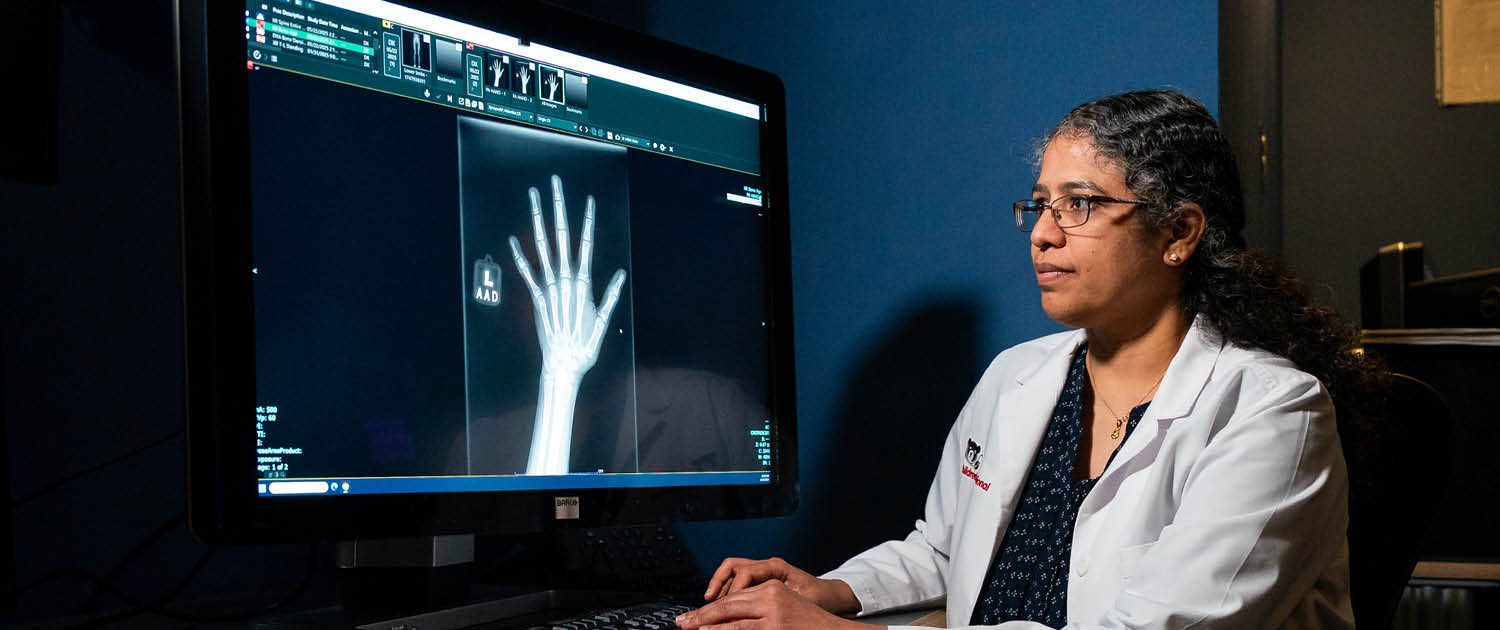
Now in its sixth year, the Turner Syndrome Clinic at Children’s National, is ranked as a Level 4 center by the Turner Syndrome Global Alliance (TSGA), this is the highest tier designation and is given to only nine hospitals across the country.
Care often begins before birth. When expecting parents are referred to the Zickler Family Prenatal Pediatrics Institute (PPI) with a confirmed Turner Syndrome diagnosis, a systematic approach and timeline for prenatal screening and counseling are activated. Parents meet with Dr. Shankar and Tucker Pyle, MD, PhD, a medical geneticist, to discuss prenatal needs, delivery planning and recommended cardiology testing during the neonatal period. Following birth, the PPI team coordinates directly with the TS Clinic to schedule the first appointment and initiate a comprehensive treatment plan.
This kind of collaboration and integration continues throughout care. Oftentimes, when the word “multidisciplinary” is used in medicine, it still involves juggling the logistics of many separate appointments. The TS Clinic at Children’s National has worked to streamline what a multidisciplinary clinic means for patients and their families. Patient families have access to all the specialists they need for care and see all five main disciplines on the same day.
Building community: For patients and research
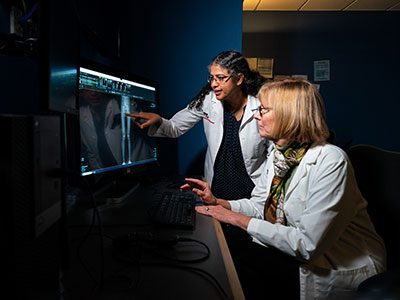
Dr. Shankar says the clinic is also a source of community for patient families. This summer, the team hosted its first TS community day event, which allowed patients and their families to meet and get to know other families with a TS diagnosis and to connect with experts from their care team in an informal setting. Many parents gave feedback that having that setting and open lines of communication was beneficial.
The work being done at Children’s National reflects a broader truth about rare disease care: innovation requires collaboration that extends beyond a single institution’s walls, and the success of these efforts aim to help children with TS everywhere. To facilitate this kind of ongoing research, Dr. Shankar is the Children’s National site lead for the InsighTS Registry, a creative effort designed to generate new scientific insights to guide healthcare in Turner Syndrome.
“Participating in collaborative research through registries and the rare disease consortium is ‘team science at its best!’. It affords a unique opportunity for all stakeholders: the community, clinicians and researchers to build on a shared vision of patient-centered research, incorporating diverse expertise and perspectives,” adds Dr. Shankar.
https://innovationdistrict.childrensnational.org/wp-content/uploads/2025/05/poster-presentation-at-PES-feature.jpg
300
400
Innovation District
https://innovationdistrict.childrensnational.org/wp-content/uploads/2025/09/InnovationDistrict_CN_WebHeader-1396px-1030x151.png
Innovation District2025-05-23 13:20:272026-01-09 16:01:51Encouraging early results for vosoritide in Turner syndrome https://innovationdistrict.childrensnational.org/wp-content/uploads/2021/02/Gracie-Popielarcheck-feature.png
300
400
Innovation District
https://innovationdistrict.childrensnational.org/wp-content/uploads/2025/09/InnovationDistrict_CN_WebHeader-1396px-1030x151.png
Innovation District2021-02-10 15:56:322026-01-09 16:01:43Raising awareness about Turner Syndrome
https://innovationdistrict.childrensnational.org/wp-content/uploads/2021/02/Gracie-Popielarcheck-feature.png
300
400
Innovation District
https://innovationdistrict.childrensnational.org/wp-content/uploads/2025/09/InnovationDistrict_CN_WebHeader-1396px-1030x151.png
Innovation District2021-02-10 15:56:322026-01-09 16:01:43Raising awareness about Turner Syndrome https://innovationdistrict.childrensnational.org/wp-content/uploads/2020/10/Clinic-Level-4-Regional-Resource-Center.png
300
400
Innovation District
https://innovationdistrict.childrensnational.org/wp-content/uploads/2025/09/InnovationDistrict_CN_WebHeader-1396px-1030x151.png
Innovation District2020-10-26 16:23:012026-01-09 16:01:39Turner Syndrome Clinic designated as Level 4 Regional Resource Center
https://innovationdistrict.childrensnational.org/wp-content/uploads/2020/10/Clinic-Level-4-Regional-Resource-Center.png
300
400
Innovation District
https://innovationdistrict.childrensnational.org/wp-content/uploads/2025/09/InnovationDistrict_CN_WebHeader-1396px-1030x151.png
Innovation District2020-10-26 16:23:012026-01-09 16:01:39Turner Syndrome Clinic designated as Level 4 Regional Resource Center https://innovationdistrict.childrensnational.org/wp-content/uploads/2019/01/little-girl-being-examined-by-doctor.jpg
300
400
Innovation District
https://innovationdistrict.childrensnational.org/wp-content/uploads/2025/09/InnovationDistrict_CN_WebHeader-1396px-1030x151.png
Innovation District2019-01-11 16:24:232026-01-09 16:01:34First Washington-based Turner syndrome clinic opens Jan. 28
https://innovationdistrict.childrensnational.org/wp-content/uploads/2019/01/little-girl-being-examined-by-doctor.jpg
300
400
Innovation District
https://innovationdistrict.childrensnational.org/wp-content/uploads/2025/09/InnovationDistrict_CN_WebHeader-1396px-1030x151.png
Innovation District2019-01-11 16:24:232026-01-09 16:01:34First Washington-based Turner syndrome clinic opens Jan. 28