Advances in celiac disease diagnosis: Q&A with Dr. Vahe Badalyan, MD
A recent study published in Pediatrics suggests that serologic testing may allow some children to be diagnosed with celiac disease without undergoing an invasive endoscopy when antibody levels are very high.
For many years, pediatric celiac disease diagnosis in North America has relied on an endoscopy and biopsy-based approach designed to maximize diagnostic certainty. In contrast, international guidelines have evolved to incorporate non-biopsy diagnostic pathways for selected patients. Experts at Children’s National Hospital, working with colleagues across the United States and Canada, sought to determine whether a non-biopsy approach—based on very high blood markers—could be safely and reliably applied to children in North America.
A recent study published in Pediatrics suggests that serologic testing may allow some children to be diagnosed with celiac disease without undergoing an invasive endoscopy when antibody levels are very high. The study found that tissue transglutaminase IgA (tTG IgA) levels elevated to 10 times the upper limit of normal or higher predicted celiac disease in approximately 95% of children. However, diagnostic accuracy varied across testing assays from different manufacturers. These findings underscore the importance of specialist evaluation and confirmatory testing before starting a lifelong gluten-free diet.
In this Q&A, Vahe Badalyan, MD, pediatric gastroenterologist and medical director of the Children’s National Celiac Disease Program, explains how this research is informing evolving diagnostic guidelines and helping ensure accurate diagnosis while minimizing unnecessary procedures and dietary restrictions.

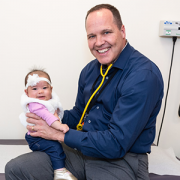
Vahe Badalyan, MD
Q: How does this work move the field forward?
A: Updated North American Society for Pediatric Gastroenterology, Hepatology and Nutrition (NASPGHAN) guidelines for pediatric celiac disease diagnosis are long overdue, and this study will serve as an important reference. This work provides the largest North American dataset to date evaluating how well tTG IgA testing performs in diagnosing celiac disease in children, addressing a critical evidence gap that has limited guideline development. By directly comparing multiple commonly used assays, the study demonstrates substantial variability in test performance and challenges the assumption that very high tTG IgA levels alone are sufficient for diagnosis in all cases.
Q: How has collaboration with experts nationwide created better outcomes for this research?
A: Studies like this require large patient populations, which are difficult for any single center to assemble. This multicenter group of clinicians and researchers has collaborated for several years and has published work on multiple aspects of celiac disease. Children’s National has been an active participant in the NASPGHAN Celiac Disease Special Interest Group, which includes many of the centers and authors involved in this study. This collaborative framework made it possible to generate robust, generalizable data.
Q: How will this work benefit patients?
A: These findings support a more individualized, patient-centered approach to diagnosing celiac disease. While endoscopy with biopsy is a safe and well-established procedure, families value having evidence-based alternatives when appropriate. At the same time, a lifelong gluten-free diet carries substantial mental, emotional, social and financial burdens for patients and families. This research reinforces the importance of making the diagnosis only when we are confident it is correct.
Our results emphasize that children with elevated tTG IgA levels should be evaluated by a pediatric gastroenterology specialist and undergo confirmatory testing before a diagnosis is made and a gluten-free diet is started. By improving diagnostic accuracy, this work helps ensure that children are placed on lifelong dietary therapy only when they truly have celiac disease, avoiding unnecessary restrictions and burdens for those who do not. Importantly, it also highlights the need for continued research to refine and improve diagnostic pathways.
Other Children’s National experts who contributed to this work include Catherine Raber, MA. Read the full study ‘Positive Predictive Value of Tissue Transglutaminase IgA for Celiac Disease’ in Pediatrics.