AI tool shows promise for faster, more accurate pediatric tuberculosis detection
AI researchers have created pTBLightNet, a deep-learning model that detects pediatric tuberculosis on chest X-rays with high accuracy.
A new international study published in Nature Communications highlights a promising step forward in using an artificial intelligence model, pTBLightNet, to detect pediatric tuberculosis (TB) on chest X-rays. The study, led in part by Marius George Linguraru, DPhil, MA, MS, Connor Family Professor of Research and Innovation and principal investigator in the Sheikh Zayed Institute for Pediatric Surgical Innovation at Children’s National Hospital and by Ramón Sánchez-Jacob, MD, a radiologist at Children’s National, could help improve early diagnosis in settings where clinical experts are scarce
The big picture
Tuberculosis remains one of the leading causes of death from an infectious agent worldwide, and children face disproportionate risks. Diagnosing TB in young patients is complex: symptoms are often nonspecific, radiographic findings are subtle and bacteriologic confirmation is difficult to obtain. As a result, many children with TB are never diagnosed or treated.
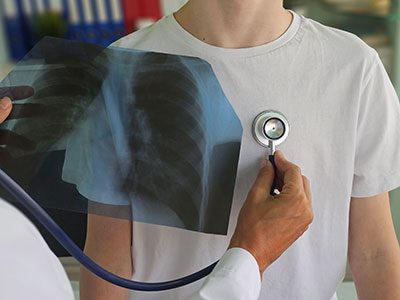
The World Health Organization (WHO) identifies chest X-rays as a central tool for screening and triage, yet interpreting pediatric images is challenging even for experts. pTBLightNet was developed to support clinics by identifying the radiographic signatures consistent with pediatric TB.
The study team, led by the Polytechnic University in Madrid, trained and evaluated the AI model on more than 900 pediatric chest X-rays collected in Mozambique, Spain, and the United States. To mirror real-world radiology practice, the model incorporates both frontal and lateral X-rays. The system was also pretrained on more than 100,000 adult chest X-rays before fine tuning on pediatric TB data.
The model achieved an accuracy of approximately 90% on data from international sites. The cohort from Children’s National was drawn from emergency department patients with respiratory symptoms.
Why this matters
Young children, especially those under five, face the highest risk of severe TB and related death. They are also the group most likely to be missed or receive delayed treatment. In this context, a tool capable of identifying TB in X-ray imaging can meaningfully shift the timeline of care and improve chances of recovery.
The study offers several important insights. First, pretraining on adult datasets and fine-tuning on pediatric cases improves the performance of the AI model. Second, age stratified models match or even exceed the performance of a single, all ages model despite being trained on substantially smaller datasets. This suggests that the radiologic presentation of TB varies enough by age to justify the development of pediatric-specific models. Third, the addition of lateral X-ray views proves especially valuable for diagnosing TB in younger children.
What’s next
The team plans to validate the AI model performance in routine clinical workflows and help clinicians distinguish TB from other respiratory infections. Integration of pTBLightNet into telemedicine and referral platforms holds potential to extend expert-level diagnostics to underserved regions, helping ensure children everywhere receive timely, accurate evaluation.
You can read the full study, “Multi-view deep learning framework for the detection of chest X-rays compatible with pediatric pulmonary tuberculosis” in Nature Communications here.
Additional research from Children’s National was done by Pooneh Roshanitabrizi, PhD.